
Effective One on One Meetings: A Manager's Guide

Most managers treat effective one on one meetings like status updates, which misses their real power. But here's what I've learned after years of coaching workplace leaders: these conversations can completely transform your team culture when you get them right. As someone who specializes in team dynamics and workplace communication, I've watched managers create environments where people actually want to bring their best work simply by mastering this one skill.
The difference between mediocre and transformational one-on-ones? Intention. When you approach these meetings as genuine development opportunities rather than checkbox exercises, everything changes. Your people feel heard, challenges get addressed before they explode, and trust builds in ways that ripple through every other interaction.
Also Read:
Table of Contents
TL;DR: Effective One-on-One Meetings
Effective one on one meetings turn status updates into coaching. Meet weekly or bi-weekly, co-create a simple agenda, ask open questions, and end with clear next steps. Do this consistently and you’ll build trust, improve performance, and make your team’s most important meeting actually matter.
Key Points
Schedule consistently: Weekly or bi-weekly meetings lasting 30-60 minutes build trust and accountability
Create collaborative agendas: Both manager and employee contribute topics to ensure relevant, engaging conversations
Balance the conversation: Cover work updates, professional development, challenges, and two-way feedback
Ask powerful questions: Use open-ended questions to understand performance, engagement, and career aspirations
Document and follow through: Take notes on action items and commitments to demonstrate accountability
Adapt for remote teams: Use video calls and informal check-ins to maintain connection across distance
Avoid common mistakes: Never cancel repeatedly, dominate the conversation, or let task updates overshadow development discussions

Why One-on-One Meetings Are Your Most Powerful Management Tool
Think about it: where else do your team members get to voice real concerns? Team meetings are too public. Hallway conversations are too rushed. One-on-ones create the only space where deeper issues can surface and get the attention they deserve. This guide shows how to run effective one on one meetings that build trust, performance, and growth.
The Business Impact of Effective 1:1s
These aren't feel-good conversations (though they often feel good). Quality one-on-ones drive measurable results. Teams with strong one-on-one cultures show higher engagement scores, lower turnover, and better performance metrics. Managers explain 70% of the variance in team engagement, according to Gallup, which is why consistent, high-quality 1:1s pay off. Problems get caught early instead of festering into crises.
When someone feels consistently supported, they stop holding back. They share ideas they might have kept to themselves. They tackle challenges with more confidence because they know backup is available. That shift in mindset shows up in everything they do.
Organizations that invest in meaningful one-on-one conversations see the payoff in retention numbers and productivity metrics. But the real magic happens in relationships. Trust compounds over time, creating teams that can handle anything together.
What Makes a One-on-One Meeting Truly Effective
Balance is everything. You need structure so time gets used well, but flexibility to follow important threads when they emerge. The best one-on-ones feel more like coaching sessions than formal meetings.
Psychological safety forms the foundation. People need to know they can admit struggles, share concerns, or discuss career dreams without judgment. This safety builds slowly through consistency, genuine listening, and following through on what you promise.
Here's the key shift most managers miss: let your team member lead. You're the guide, not the director. When people drive their own agenda and conversation, they feel ownership over their growth and development. At their best, effective one on one meetings feel like coaching sessions with structure and psychological safety
How to Prepare for Productive One-on-One Meetings
Preparation transforms casual check-ins into powerful development conversations. Both people should come ready to engage with clear priorities and discussion points.
Setting the Right Cadence and Duration
Weekly or bi-weekly meetings hit the sweet spot, running 30 to 60 minutes each. New team members benefit from weekly touchpoints. More experienced people often do well with bi-weekly sessions. Match the frequency to their needs and current challenges.
Here's what matters most: consistency. Pick a time and protect it fiercely. SHRM recommends a clear cadence and a simple standing agenda to keep one-on-ones productive. When you regularly cancel or reschedule, you're sending a clear message about priorities. Your team notices these patterns and adjusts their engagement accordingly.
Thirty minutes works for focused discussions on immediate concerns. Sixty minutes creates space for deeper career conversations. Let the topics and relationship guide your choice.
Creating a Collaborative Agenda Framework
Don't create agendas solo. The most productive conversations happen when both people contribute topics throughout the week. Set up a shared document where agenda items can accumulate naturally.
Common categories include project updates, current challenges, wins worth celebrating, feedback to exchange, and development discussions. Share the agenda at least a day ahead so both people can prepare thoughtfully. If you need a starting point, this 1-on-1 meeting template outlines a practical agenda you can copy.
Think of the agenda as a guide, not a script. Stay flexible enough to explore important issues that surface during conversation. Sometimes the best insights come from unexpected directions. Shared agendas turn routine check-ins into effective one on one meetings that people look forward to
Pre-Meeting Preparation for Both Parties
Review notes from previous meetings before sitting down. Look for patterns, track progress on commitments, and gather relevant context. This review helps you show up present and prepared.
Encourage team members to reflect on recent work, challenges they're facing, and specific questions they want to explore. Concrete examples lead to better problem-solving than vague feelings.
Both people benefit from setting intentions beforehand. What do you hope to accomplish? What would make this time worthwhile? Simple questions that create focus and drive conversations toward meaningful outcomes.
Essential Topics to Cover in Your One-on-Ones
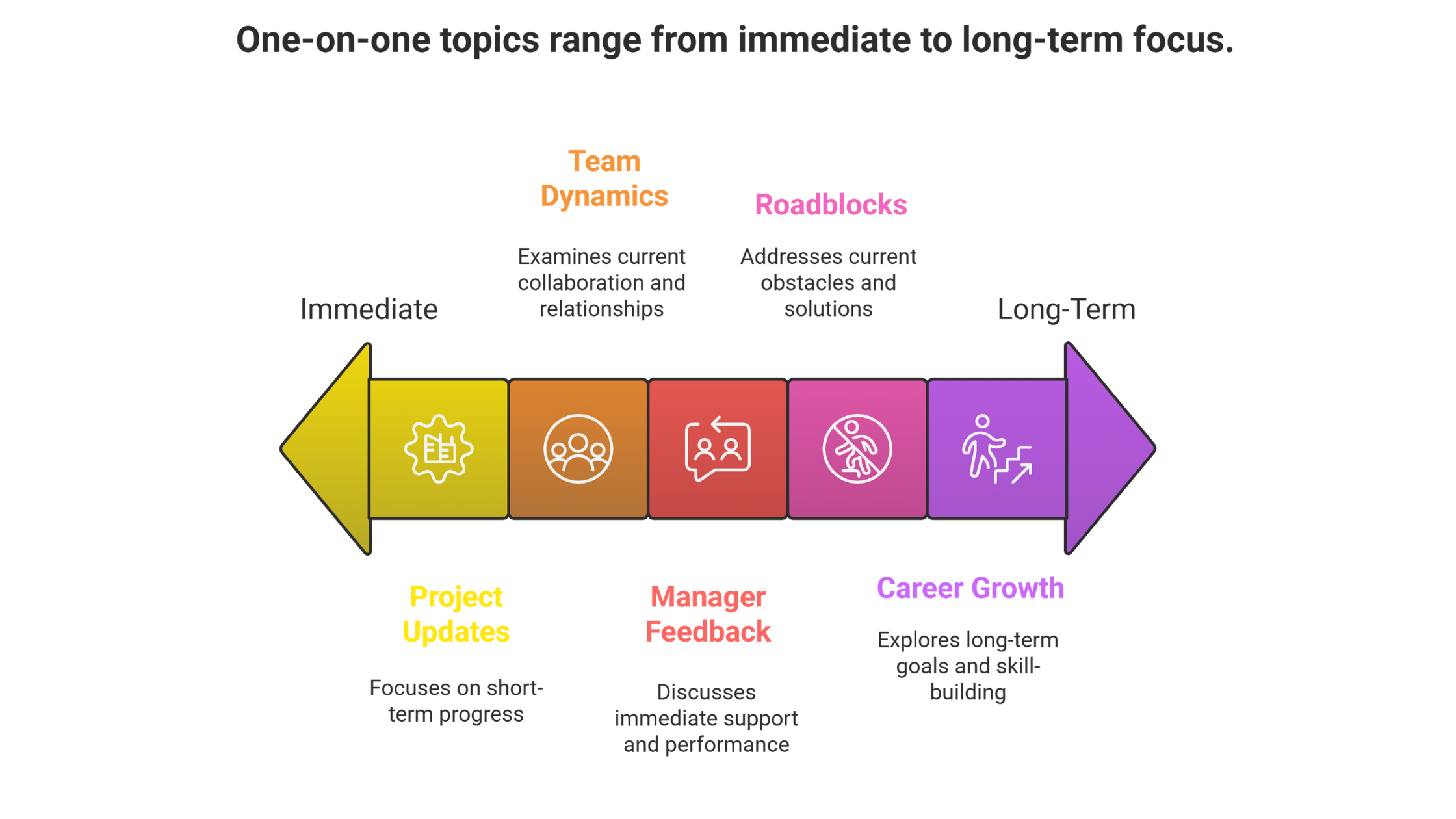
Balance immediate work concerns with longer-term development. Variety keeps conversations fresh and ensures you're addressing the full scope of someone's experience.
Current Work and Project Updates
Project updates belong here, but don't let them take over. Spend 10-15 minutes on work status, focusing on progress and obstacles rather than detailed task lists.
Use these discussions as launching points for deeper exploration. When someone mentions a challenge, dig in. What's making this hard? What have they tried? What support would help? Transform status updates into coaching opportunities.
Celebrate wins during this time too. Recognition matters, and one-on-ones provide space to acknowledge specific accomplishments and explore what contributed to success.
Professional Development and Career Growth
Career conversations make these meetings transformational. Regular development discussions show your investment in their future and help align personal aspirations with organizational opportunities.
Ask about their goals, both immediate and long-term. What skills do they want to build? What experiences would move them forward? These conversations help you spot development opportunities and create meaningful growth plans.
Don't save career discussions for annual reviews. Weave development into regular one-on-ones, tracking skill-building progress and identifying new learning opportunities. For people dealing with imposter syndrome, these conversations provide crucial validation and perspective on their growth.
Challenges, Roadblocks, and Support Needs
Creating space for honest challenge discussions might be the most valuable thing you do. People face obstacles daily, and one-on-ones give them a safe place to voice struggles and work through solutions together.
Ask directly: "What's getting in your way right now?" or "Where are you feeling stuck?" These questions signal that you expect challenges and want to help address them. Listen without rushing to solve every problem immediately.
Sometimes the best support is validation and listening. Other times you can remove obstacles, provide resources, or connect them with helpful colleagues. Match your response to what they actually need.
Team Dynamics and Collaboration
One-on-ones reveal team dynamics you might miss otherwise. Check in on how they're experiencing collaboration, colleague relationships, and overall team environment.
Try questions like "How are things going with the rest of the team?" or "Any relationships feeling challenging lately?" This helps you identify interpersonal issues before they escalate.
Pay attention to patterns across different one-on-ones. When multiple people mention similar team concerns, you've spotted something that needs broader attention.
Manager Feedback and Two-Way Communication
Make space for feedback about your own management. Ask explicitly how you can better support them. Questions like "What's one thing I could do differently?" or "How am I doing as your manager?" require vulnerability but build tremendous trust.
Share constructive feedback here too, balancing criticism with recognition. Frame feedback as coaching rather than judgment, focusing on specific behaviors and their impact. For managers who struggle with delivering criticism, one-on-ones provide a private setting to practice this crucial skill.
Mastering the One-on-One Conversation
The quality of your questions, listening skills, and conversation balance determines meeting outcomes. These abilities improve with intentional practice.
Powerful Questions That Drive Meaningful Dialogue
Your questions determine conversation depth. Yes/no questions shut down dialogue. Open-ended questions that invite reflection create space for meaningful exchange.
Questions for Understanding Performance and Engagement
Performance and workload questions:
"What project excites you most right now, and why?"
"Where do you feel you're making the biggest impact?"
"What's consuming most of your time and energy lately?"
"How does your current workload feel?"
"What aspect of your work feels most challenging?"
These questions reveal not just what someone is doing, but how they're experiencing their work. Watch for energy levels and engagement in their responses.
Engagement and satisfaction questions:
"What's giving you energy in your work right now?"
"What's draining your motivation?"
"If you could change one thing about your daily work, what would it be?"
"What would make your work more meaningful?"
Engagement questions often reveal struggles before performance issues become visible. They create opportunities for adjustments that prevent burnout.
Questions for Career Development Discussions
Short-term growth questions:
"What skills do you want to develop over the next six months?"
"What projects or experiences would help you grow?"
"Where would you like more responsibility or autonomy?"
Long-term career questions:
"Where do you see yourself in two to three years?"
"What roles interest you as potential next steps?"
"What experiences do you need for the career path you want?"
"How can I support your long-term goals?"
Career development questions demonstrate investment in their future beyond current productivity. They help identify growth opportunities and align individual dreams with team needs.
Questions for Building Trust and Psychological Safety
Relationship and trust questions:
"How are you feeling about our working relationship?"
"Is there anything I'm doing that makes your work harder?"
"What do you need from me that you're not getting?"
"How comfortable do you feel sharing concerns with me?"
Wellbeing and balance questions:
"How are you doing outside of work?"
"How's your work-life balance feeling?"
"Is there anything going on that I should know about?"
"What support do you need right now, work-related or personal?"
These questions acknowledge people as complete humans, not just employees. They signal care about wellbeing and create space for vulnerable conversations when needed.
Active Listening and Coaching Techniques
Active listening means focusing completely on what they're saying rather than planning your response. Put away devices, make eye contact, and give full attention.
Use verbal and non-verbal cues to show engagement: nod, maintain eye contact, offer brief confirmations like "I hear you" or "That makes sense." Resist interrupting, even when you think you know where they're heading.
Reflect back what you've heard: "So it sounds like you're feeling overwhelmed by the timeline and aren't sure you have the resources needed. Is that right?" This validates their experience and confirms your understanding.
Use coaching questions to help them think through challenges instead of immediately offering solutions. Google’s re:Work guide on coaching managers shows how flexible 1:1 conversations build clarity and performance. "What have you tried so far?" or "What options do you see?" empowers their problem-solving skills.
Balancing Manager-Led vs. Employee-Led Discussions
The best one-on-ones are primarily employee-led. They should drive the agenda and conversation flow while you guide and coach. This empowers them and ensures meetings address their priorities.
Some manager-led elements are necessary. You need to provide feedback, share updates, and sometimes redirect conversation toward topics needing attention. Finding the right balance is key.
Good rule of thumb: they should talk 70-80% of the time. If you're dominating conversation, pause and ask a question. Create space for them to think out loud and arrive at their own insights.

Ready-to-Use One-on-One Meeting Templates
Templates provide helpful structure without being rigid. Use these as starting points, adapting to your team's needs and management style.
Standard Weekly Check-In Template
Opening (5 minutes):
How are you doing this week?
What's on your mind today?
Work Updates (15 minutes):
What progress have you made since we last met?
What challenges or roadblocks have you hit?
What's your focus for the coming week?
Support and Development (15 minutes):
What support do you need from me?
What's one thing you learned this week?
Any feedback you'd like to share?
Action Items and Closing (5 minutes):
Review commitments and next steps
Confirm agenda items for next meeting
This framework provides consistent structure while staying flexible enough to explore issues that emerge naturally.
First 1:1 with a New Team Member
Getting to Know Each Other (20 minutes):
Tell me about your background and what brought you here
What excites you most about this role?
What concerns or questions do you have?
What does success look like to you in the first 90 days?
Working Preferences (20 minutes):
How do you prefer to receive feedback?
What communication style works best for you?
What has made past manager relationships successful?
What should I know about how you work best?
Setting Expectations (20 minutes):
Review team norms and expectations
Discuss one-on-one format and frequency
Identify immediate priorities and goals
Share resources and key contacts
First meetings establish your relationship foundation. Focus on building connection and understanding rather than diving into work details immediately.
Monthly Performance and Development Template
Performance Review (20 minutes):
Review progress on current goals
Discuss recent accomplishments and challenges
Provide specific feedback on performance
Address concerns or improvement areas
Development Discussion (25 minutes):
Review progress on development goals
Identify new skills to build
Discuss learning opportunities and resources
Update career development plan
Forward Planning (15 minutes):
Set goals for the coming month
Identify potential obstacles and support needs
Review action items and commitments
Monthly meetings allow more comprehensive performance and development discussions than weekly check-ins provide.
Quarterly Career Planning Template
Career Aspirations Review (20 minutes):
Revisit long-term career goals
Discuss any changes in interests or aspirations
Explore internal opportunities aligned with goals
Skills and Competencies Assessment (20 minutes):
Review current skill level and growth areas
Identify gaps between current abilities and career goals
Discuss training, mentoring, or project opportunities
Action Planning (20 minutes):
Create specific development plan for next quarter
Identify stretch assignments or new responsibilities
Set career milestones and success metrics
Establish check-in points for progress review
Quarterly career conversations show commitment to long-term development and help align individual growth with organizational opportunities.

Adapting Your Approach for Remote and Hybrid Teams
Remote and hybrid environments need intentional adjustments to maintain connection through one-on-ones. Distance makes reading body language harder, so you must be more deliberate in your approach.
Virtual Meeting Best Practices
Video calls are essential for remote one-on-ones. Camera-on meetings let you observe facial expressions and create more personal connection than voice-only calls. Make sure both people have reliable technology and quiet space.
Start with brief personal connection. A few minutes of casual life conversation helps build rapport and eases into deeper discussions. This warm-up becomes especially important without daily in-person interactions.
Be extra intentional about eliminating distractions during virtual meetings. Close email, silence notifications, resist multitasking urges. Team members notice when you're only partially present, undermining the psychological safety you're building.
Use screen sharing strategically when reviewing documents but don't let technology dominate conversation. Focus should remain on dialogue rather than presentations or detailed material reviews.
Maintaining Connection Across Distance
Remote teams need more frequent touchpoints to maintain strong relationships. Consider increasing meeting frequency for remote members or adding brief informal check-ins between scheduled sessions.
Create opportunities for casual conversation that happens naturally in office environments. Use opening or closing minutes for unstructured chat, or schedule occasional "coffee chats" focused purely on connection.
Pay special attention to inclusion and belonging for remote team members. Ask specifically about their remote work experience, whether they feel connected to the team, and what would help them feel more included in team culture.
Common One-on-One Mistakes and How to Avoid Them
Even well-intentioned managers make predictable mistakes that undermine one-on-one effectiveness. Recognizing these pitfalls helps you avoid them.
Canceling or Constantly Rescheduling
Repeatedly canceling one-on-ones sends a crystal-clear message: this isn't a priority. Team members notice when other commitments consistently take precedence over your time together.
Treat these meetings as non-negotiable commitments. Block time like any important meeting and protect it from other demands. If you absolutely must reschedule, do it well in advance with an immediate alternative time.
Benefits only materialize with consistency. Irregular meetings prevent building conversation momentum and addressing issues before they escalate.
Letting Task Updates Dominate the Conversation
Status updates have their place, but when they consume entire meetings, you've missed opportunities for deeper dialogue. Task discussions should launch more meaningful conversations about challenges, learning, and development.
If you spend most meetings on project updates, you probably aren't getting enough information through other channels. Consider implementing shared documents for asynchronous updates, freeing one-on-one time for higher-value discussions.
When project updates do come up, use them strategically. Ask follow-up questions revealing underlying issues: "What's making this challenging?" Transform status updates into coaching conversations.
Failing to Document and Follow Through
Taking notes demonstrates that you value the conversation and intend following through on commitments. Without documentation, important points get forgotten and action items fall through cracks.
Keep a running document for each team member capturing key discussion points, decisions, and action items. Review before each meeting to track progress and ensure mutual accountability.
Follow through on commitments religiously. If you promise to investigate something, provide resources, or make introductions, do it promptly. Team members watch whether you keep your word, and follow-through builds trust faster than anything else.
Doing All the Talking
One-on-ones should be dialogues, not monologues. When you dominate conversation, you miss insights they could offer and signal their input isn't truly valued.
Monitor your talk time. If you notice yourself speaking more than them, pause and ask a question. Create space for thinking and processing without rushing to fill silences.
Some people need more encouragement to open up. Use coaching skills to draw out quieter individuals with open-ended questions and patient response time. For those struggling with people-pleasing tendencies, extra patience helps them share authentic concerns rather than simply agreeing.
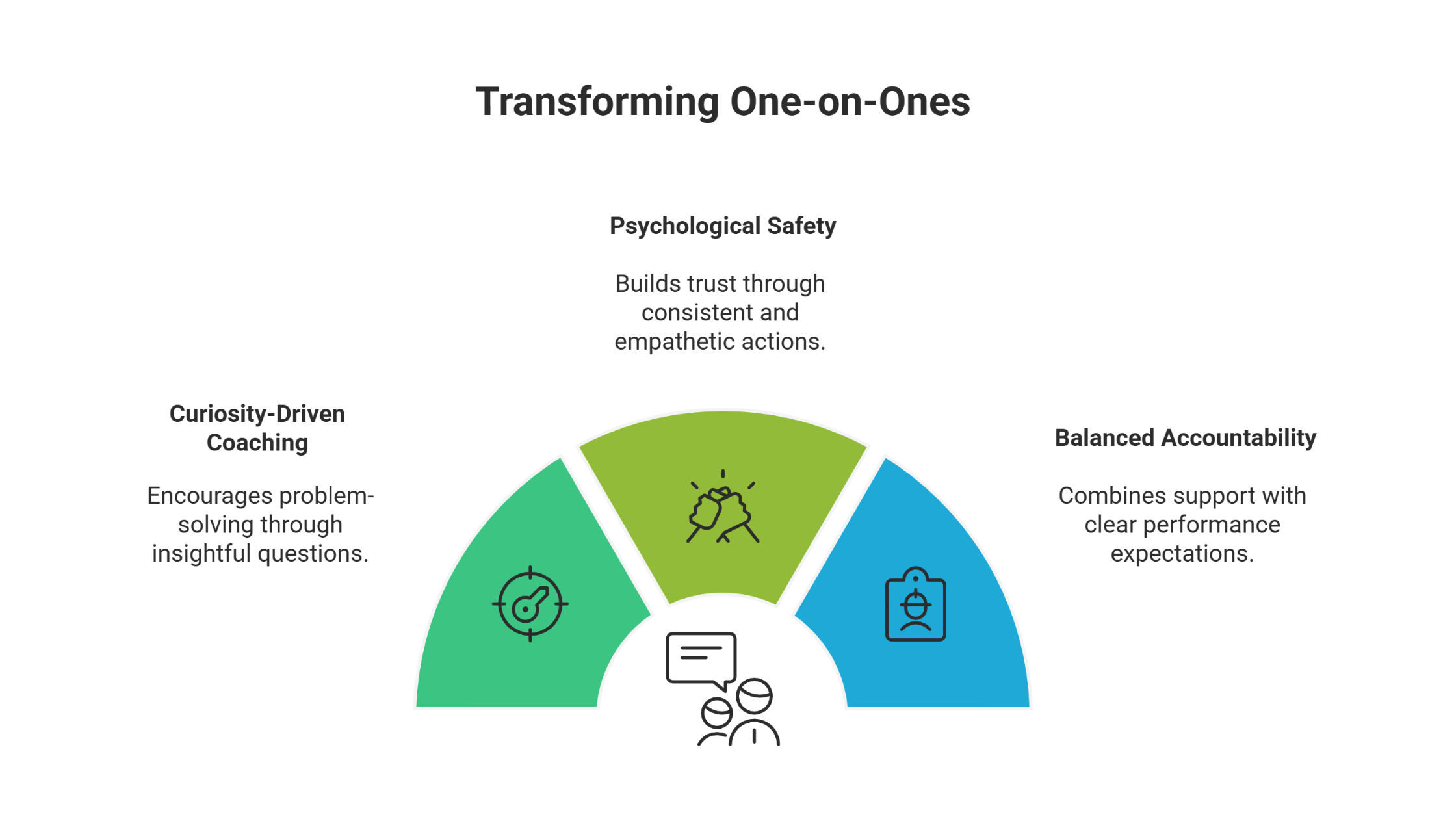
Top 3 Strategies for Transforming Your One-on-Ones
1. Lead with curiosity, not solutions. Your management instinct is solving problems quickly. Resist this in one-on-ones. Ask questions that help them think through challenges themselves. This coaching approach builds problem-solving capabilities and confidence.
2. Create psychological safety through consistency. Trust builds when you show up reliably, follow through on commitments, and respond to vulnerability with empathy rather than judgment. Small, consistent actions matter more than occasional grand gestures.
3. Balance support with accountability. Effective one-on-ones combine genuine care for wellbeing with clear performance expectations. Hold people accountable while providing support they need to meet those expectations. This balance creates both connection and results.
Implementing Your One-on-One Strategy: Action Plan
Understanding principles is just the beginning. Implementation requires systematic approach and commitment to continuous improvement.
Setting Up Your 1:1 System
Start by auditing current practice. How frequently do you meet with each team member? How structured are conversations? What's working well and what needs improvement?
Schedule recurring meetings at consistent times. Put appointments on both calendars and treat as protected time. Choose cadence matching each person's needs (new team members or those facing challenges may need more frequent touchpoints).
Create shared document system for agendas and notes. This could be simple Google Docs or sophisticated one-on-one software. The key is ensuring both parties can contribute agenda items and access previous meeting notes.
Communicate intentions clearly to your team. Explain what you hope to accomplish through regular one-on-ones, how you plan structuring them, and what you expect in terms of preparation and participation.
Measuring Success and Continuous Improvement
Track your practice health through quantitative and qualitative measures. Quantitatively, monitor meeting consistency, action item completion, and progress on development goals discussed.
Qualitatively, assess whether conversations feel productive and meaningful. Periodically ask for feedback: "How are these meetings working for you? What would make them more valuable?"
Notice changes in engagement, performance, and retention among team members. While one-on-ones aren't the only factor, improvements often correlate with more effective conversations.
Continuously refine your approach based on feedback and results. Try different question techniques, adjust meeting frequency, or experiment with new agenda formats. Your practice should evolve as you learn what works best.
Tools and Resources to Support Your Practice
Various tools can streamline your practice, from simple shared documents to specialized software platforms. Choose tools matching your team's needs and organization's resources.
Basic tools include shared documents for agendas and notes, calendar systems for consistent scheduling, and task management for tracking action items. These simple resources provide sufficient structure for most teams.
More sophisticated tools offer automated agenda prompts, goal progress tracking, and performance management integration. Evaluate whether additional capabilities justify investment for your situation.
Beyond tools, invest in developing coaching and communication skills. Technology matters less than your ability to ask powerful questions, listen actively, and create psychological safety. Professional development in these areas pays dividends across all management responsibilities.

Conclusion
Effective one-on-ones transform manager-employee relationships and drive meaningful improvements in engagement, performance, and retention. The strategies in this guide provide a comprehensive framework for conducting meetings that truly matter. Consistent, effective one on one meetings transform relationships and results.
Success lies in consistency, intentionality, and genuine care for team members' growth and wellbeing. When you show up regularly, ask powerful questions, listen deeply, and follow through on commitments, you create trust and psychological safety foundations. These conditions enable honest conversations that move individuals and teams forward.
Remote and hybrid environments require additional intentionality, but core principles remain unchanged. Whether meeting virtually or in person, focus on creating space for meaningful dialogue about work, development, challenges, and aspirations.
Avoid common pitfalls like frequent canceling, letting task updates dominate, or failing to document and follow through. These mistakes undermine trust and waste one-on-one potential. Instead, approach each meeting as an opportunity to coach, support, and develop team members.
Implementation requires establishing systems, using helpful tools, and committing to continuous improvement based on feedback and results. Start where you are, make incremental improvements, and watch how small investments in individual relationships compound into significant team and organizational impact.
As someone who specializes in helping leaders build stronger workplace relationships, I've witnessed the transformative power of well-executed one-on-ones. They're not just calendar meetings but your most powerful tool for building high-performing, engaged teams. Whether you're working to set better boundaries at work or strengthen your overall leadership approach, effective one-on-ones provide the foundation.
Frequently Asked Questions About Effective One-on-One Meetings
How often should I meet with each team member for one-on-ones?
Weekly or bi-weekly meetings work best for most manager-employee relationships. Weekly meetings are ideal for new team members, those facing challenges, or during significant change periods. Bi-weekly meetings provide sufficient touchpoints for established relationships with strong performers. The key is consistency rather than specific frequency. Choose a cadence you can maintain reliably.
What if my team member says everything is fine and has nothing to discuss?
This response often indicates insufficient psychological safety. Ask more specific, open-ended questions rather than general "How's it going?" queries. Try: "What's been most challenging this week?" or "What's one thing that would make your work easier?" Share your own challenges to model vulnerability. Over time, as trust builds, they'll open up more readily.
How do I balance giving feedback with listening during one-on-ones?
Aim for them to talk 70-80% of the time. When providing feedback, do so clearly and specifically, then ask for their perspective. Rather than lecturing, engage in performance and behavior dialogue. Use coaching questions to help them reflect on their own performance before offering observations. This makes feedback feel collaborative rather than one-directional.
Should I take notes during one-on-ones, or does that seem impersonal?
Taking notes demonstrates conversation value and follow-through intention. Explain at the start: "I'll take a few notes so I remember what we discussed and can follow up appropriately." Keep note-taking brief and maintain eye contact during important moments. Share notes afterward so they have the same record.
What if I don't have time for regular one-on-ones with everyone?
If you can't consistently meet individually with team members, you have too many direct reports. One-on-ones aren't optional nice-to-haves but essential management activities. Prioritize them over other meetings, delegate time-consuming tasks, or restructure organization so span of control allows proper people management. Time invested in one-on-ones prevents larger problems and improves overall team productivity.
Ready to transform your leadership approach and build stronger team relationships? Explore how professional coaching can help develop skills that make one-on-one meetings truly transformative, or reach out directly through my contact page to discuss working together.